

- Print this page
- This page as PDF (260KB)
Our sustainability footprint
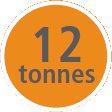
12 tonnes of rock mined to produce one ounce of platinum.
Mining and processing scarce and valuable PGMs is a highly complex process that requires a significant amount of effort and ingenuity.
The Zondereinde mine life cycle extends from the development and construction of mining operations, to mining and processing, and finally to rehabilitation and closure. The various stages in this life cycle for the Zondereinde complex are illustrated below.
In F2010 Zondereinde produced 321 475 ounces of platinum (Pt), palladium (Pd), rhodium (Rh) and gold (Au) (3PGE+Au), along with iridium (Ir), ruthenium (Ru) and silver (Ag), and base metal by-products copper (Cu) and nickel (Ni). To produce these PGMs and by-products Northam mined 2 280 501 tonnes of material (ore and waste) and milled 2 038 225 tonnes of reef. So, for every ounce of PGMs produced, some 7 tonnes of rock was mined at Zondereinde. Given that platinum constitutes around 60% of the total amount of PGMs produced, 12 tonnes of rock was mined to produce one ounce of platinum. (This will vary from mine to mine as grades and recoveries of platinum vary from operation to operation).
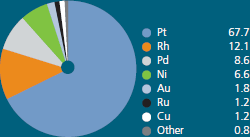
Of the value of the metals sold in F2010, platinum is the primary product produced by contribution to revenue (67.6%), followed by rhodium (12.1%) and palladium (8.6%) and nickel (6.6%).
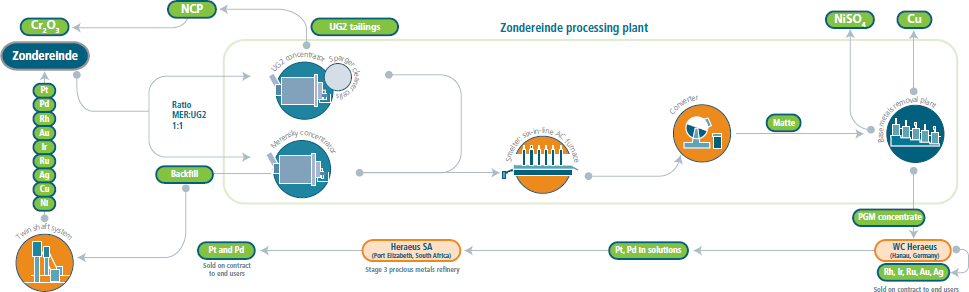
Useful metals – from mine to market
Platinum group metals (PGMs), including platinum, palladium, rhodium, ruthenium and iridium, have a wide range of industrial and technical applications. We include gold in the basket of metals we produce. Nickel is also a significant by-product by value. While PGM resources are relatively scarce, concentrated in southern Africa, gold and nickel are found more extensively across the globe.

Platinum
Given its many industrial applications and its desirability for investment purposes, platinum is one of the most sought after precious metals.
- The best known use of platinum is in catalytic convertors which form part of the exhaust system in motor vehicles. Instead of releasing deadly carbon monoxide, hydrocarbons and nitric oxide into the atmosphere, autocatalysts convert these harmful emissions into carbon dioxide and water.
- The rarity, hypoallergenic and tarnishresistant properties of platinum make it the ideal choice for creating the finest jewellery, which is particularly sought after in the bridal section.
- Platinum is used in fuel cells which generate electrical power using hydrogen and oxygen as fuel. As they have no moving parts, fuel cells generate power silently, emitting only pure water as a by-product and do not contribute to air or noise pollution in any way. Fuel cells are not yet commercially available, but there is a significant potential market for platinum.
Rhodium
Rhodium is one of the rarest precious metals on earth. Among its many uses, rhodium is used as a catalyst in a number of industrial processes, primarily in three-way catalytic convertors.
Palladium
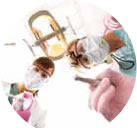
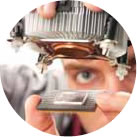
Over half of the world-wide supply of palladium is used in catalytic convertors. Palladium is also found in many electronics including computers, mobile phones, and multi-layer ceramic capacitors, and is used in dentistry, medicine, photography, and hydrogen purification.
Nickel
Nickel is primarily an alloy metal and its chief use is in stainless steel and cast iron, of which there are many varieties.
Ruthenium, iridium
Ruthenium is used in electronics to increase magnetic data-recording memory in hard disks and to improve the plasma display panels of flat screen televisions. Along with iridium, it is also used in chemical and electronic applications.
Gold
Gold has for centuries been a store of value and a form of monetary exchange. Other uses of gold include coinage, ornaments, jewellery and gilding. Gold is also used within the textile industry and for dental applications.
Our sphere of influence
As a mining and processing company, Northam’s sphere of influence extends beyond the boundaries of its mines. Northam’s existing and potential impacts may be on:
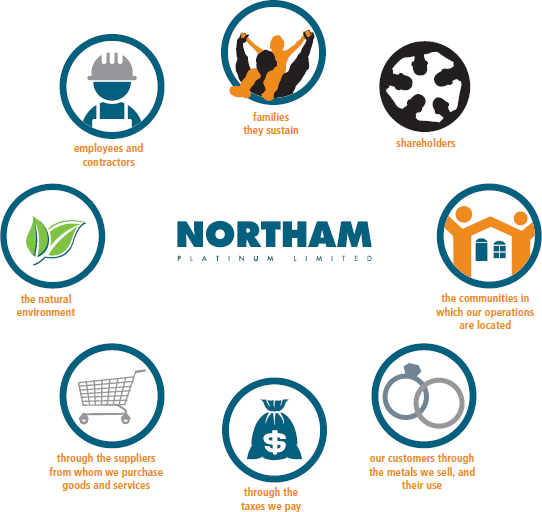
See our discussion on engaging with stakeholders under Governance of this report.
Metals – contributions to revenue F2010 (%)
NORTHAM SUSTAINABLE DEVELOPMENT REPORT 2010