

- Print this page
- This page as PDF (481KB)
Social performance
- Safety, health and employee well-being
- Employment and human rights
- Northam in the community
- Product responsiblity
Safety
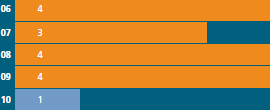
- One fatal accident in F2010
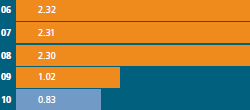
- LTIIR – 0.83 per 200 000 hours
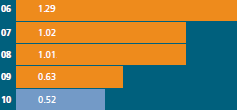
- RIIR – 0.52 per 200 000 hours
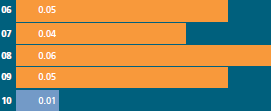
- FIIR – 0.01 per 200 000 hours
- 1 881 shifts lost due to occupational injury or illness
Ensuring the safety of employees and contractors is a primary area of focus for the company and takes precedence over any production objectives. A critical objective has been to develop and instill a shared duty of care between employees at all levels within the company.
Management approach
Safety
Extensive legislation and regulation guides safety and health practices and processes in the workplace, the most significant being the Mine Health and Safety Act. Northam has a safety and health policy in place, and various recognition agreements with organised labour that provide the context for its implementation. As is required by the Act, emphasis is placed on the joint direction of safety and health.
The general manager holds ultimate responsibility for safety and health at Zondereinde. Day-to-day management of safety is delegated to operational management, who are in turn supported by a minebased safety and health department.
A joint management/union health and safety committee meets on a monthly basis, or more frequently as required. The committee is charged with identifying critical issues that hamper safety and health performance, the provision of personal protective equipment, participating in inspections, audits and accident investigations; and identifying areas for training and education. A particular role of the committee is the empowerment to take responsibility for safety and health, to identify potentially hazardous situations and to encourage employees to exercise their right to refuse to work when conditions are not safe.
Around 84% of the company’s workforce is affiliated to a representative union and, through the union structures, participates in planning for and management of safety and health issues through their elected health and safety committees. Further, employees and management are encouraged to participate in safety and health matters at all levels. Elections are held on a bi-annual basis by union members for employee safety representatives. At 30 June 2010, there were three full-time safety representatives and 1 407 trained workplace representatives at Zondereinde.
Safety performance and issues are reviewed and monitored both by the mine and by the company executive and considered by the relevant board committee on a quarterly basis.
In July 2010, the Minister of Mineral Resources called a meeting of platinum companies leadership to collaboratively engage on safety issues. Northam chief executive, Glyn Lewis, participated in this meeting and will continue to participate in quarterly meetings by the Minister to report and review progress.
Health
Northam offers an integrated and comprehensive occupational health care service to all employees through the medical service provider, Platinum Health, which operates facilities on site at the mine and in the nearby employee village. All services are offered free of charge to all employees who contribute to the Platinum Health Scheme. In addition to the medical services offered, Northam has in place a comprehensive TB and HIV/AIDS management programme, which is also administered by Platinum Health. In addition, a minebased employee is responsible for the information and awareness aspects of the TB and HIV/AIDS programme.
Performance in F2010
Safety
It is with deep regret that Northam reported one fatal accident at the Zondereinde mine in F2010. The board and management extend their sincere condolences to the families and colleagues of Mr Sebenzile Ketile, who died on 13 May 2010 in a drilling-related accident. Mr Ketile was from the Eastern Cape and had been in the employ of the company for five years.
The performance statistics reported below are for the Zondereinde mine. The mine’s fatal injury incidence rate (FIIR) was 0.01 per 200 000 hours worked (F2009: 0.05). The lost time injury incidence rate (LTIIR) for F2010 was 0.83 per 200 000 hours (F2009: 1.02), which is a 19% improvement on the prior financial year, and the reportable injury incidence rate (RIIR) was 0.52 per 200 000 man hours (F2009: 0.63), reflecting a 17% improvement on F2009.
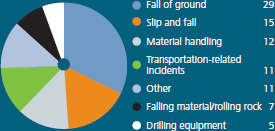
The primary causes of lost time injuries were falls of ground (29%) slips and falls (15%), materials handling incidents (12%) and transportation-related incidents (11%). A total of 1 881 shifts were lost due to occupational injury or illness in F2010 (F2009: 1 037). Although overall safety performance has improved at Zondereinde, the significant increase in shifts lost due to occupational injury is as a result of an increased severity of injuries. Following the fatal accident on 13 May 2010, the mining inspectorate issued a section 54 instruction to close the mine until the accident had been investigated and a presentation on a way forward was presented to the DMR. Section 54 instructions relating to safety infringements were imposed on five other occasions. In total, 17 shifts were lost across the mine as a result of DMR-imposed safety stoppages. Importantly, there has been an increase in mine-instigated stoppages indicating the success of the safety training campaign.
* Please note the restatement of the F2009 occupational injury lost shifts from 919, as previously reported, to 1 037.
Health
- Medical surveillance – 10 765 examinations in F2010
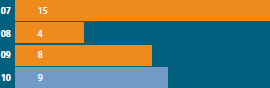
- NIHL – nine new cases
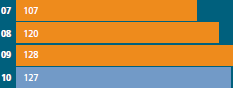
- TB – 127 new cases
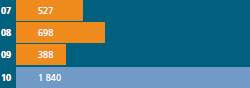
- 1 840 VCT encounters – 374% increase
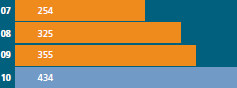
- 434 employees on ART
Fatalities
FIIR (per 200 000 hours worked)
Causes of lost time injuries
LTIIR (per 200 000 hours worked)
RIIR (per 200 000 hours worked)
Health
Occupational health surveillance is undertaken on an ongoing basis. In F2010, 10 765 (1 946 entry, 1 031 exit and 7 788 annual) employee and contractor examinations were undertaken (F2009: 1 728 entry, 1 081 exit and 7 874 annual).
In addition to general health screening and as a preventative measure, the medical surveillance programme identifies the incidence of noise-induced hearing loss (NIHL), pulmonary tuberculosis (TB), and occupational lung disease (OLD).
The use of hydropower underground, particularly for powering rockdrills, reduces the level to which Northam employees are exposed to noise and also aids in tempering dust generation. There is no threat of silicosis at Zondereinde as the rock mass does not contain quartz.
All noisy equipment that did exist on site has been reduced to noise levels below 110dBA, and personal protective equipment is provided to all employees to ensure that they are not exposed to noise levels of above 85dBA over an extended period of time. Nine new cases of NIHL were identified during F2010, with two cases being compensated (F2009: 8).
TB is classified as an occupational illness in some instances in South Africa. Northam is conscious of the health care burden presented by the disease and active programmes are in place to address this epidemic. Of particular concern is the symbiotic relationship between TB and HIV. In total, 127 new cases of TB were detected at Northam in F2010 (F2009: 128).
Heat tolerance testing forms an important pre-emptive means of addressing the heat burden at the Zondereinde mine and in preventing heat stress. Owing to the high virgin rock temperature (VRT) at Zondereinde (ranging between 51.4°C and 69.8°C), all employees are required to undergo heat tolerance testing on an annual basis. Employees may be precluded from working underground as a result of these tests. During F2010 7 394 heat tolerance tests were undertaken and no cases of heat stress were reported. There were no cases of heat stroke reported.
Safety strategy
During F2010, various initiatives to encourage zero injuries were implemented at Zondereinde.
A programme to enhance the quality of supervision and to achieve and maintain the objectives of the quality safety management system has been implemented at Zondereinde. Further, hazard identification and risk assessment (HIRA) processes with the aim of further reducing at-risk behaviour, have also been undertaken.
One of the most successful safety initiatives has been the ‘Stop and Fix’ programme, in which regular inspections of working areas are carried out by team leaders and management. If any irregularities are encountered during these inspections, employees are required to stop mining activities and fix the problem before work in the identified area can continue. Employees are then expected to investigate the cause of the issue and present procedures to rectify the situation to the safety committee. Employees are actively encouraged to exercise their right to refuse to work if conditions are not safe.
Other initiatives include a safety ladder campaign to encourage employees to work safely and without injury against a set target of consecutive days. Once an injury-free cycle has been completed, employees from respective stations qualify to receive a token of recognition from management. The value of the token of recognition increases as the injury-free cycle continues. On a daily basis, employees are exposed to a safety quiz which encourages them to improve their safety knowledge. Participants who answer safety related questions correctly, qualify to stand a chance to win a prize as part of a ‘Wheel of spin’.
The aim of this campaign is to promote visible and interactive participation in safety amongst employees and to reward employees for actively taking part in safety initiatives and to test their knowledge of safety.
Safety and health will continue to receive rigorous attention during F2011. An area of attention will be to improve physical conditions in the workplace and, in particular, to enhance the facilities provided to female employees who work underground.
Driving employee well-being
Northam recognises that the well-being of employees extends beyond occupational health care and, consequently, the focus of health care at Northam has been increasingly extended to include other health issues which have an impact on the well-being of employees. Health screening, the active management of pulmonary TB and programmes to combat the incidence and impact of HIV/AIDS have been included in the overall health programme at Northam.
Around 1.4% of the total workforce (130 people) currently participate in the company’s wellness programme.
New cases of NIHL identified
Tuberculosis (TB)
Northam runs a highly-effective Directly Observed Treatment (DOT) regime for the treatment of TB, which is aligned to the World Health Organization guidelines. In F2010 the incidence rate of TB was 12.4 per 1 000 employees, with 127 new cases diagnosed (F2009: 128), and 107 employees and 20 contractors participated in the DOTS programme.
HIV/AIDS
The HIV/AIDS pandemic continues to present a challenge to communities, business and government in South Africa. Northam’s HIV/AIDS policy, adopted by the company in F2005, provides for the care of employees, education programmes, confidentiality of information and non-discrimination.
All employees have access to voluntary counselling and testing (VCT) programmes, the provision of antiretroviral therapy (ART), as well as professional counselling and support and is focused on the following priorities:
- persuading employees who are HIV negative not to participate in high risk behaviour, through education and awareness programmes, mass distribution of condoms, the treatment of sexually transmitted infections (STIs) and a peer education programme. In total, some 73 850 male condoms and 192 female condoms were distributed during the year.
- early detection and identification of HIV to limit high-risk behaviour amongst those infected and to start them on a treatment regimen that can prolong their healthy lives. The VCT programme underpins this objective and provides the necessary counselling.
- persuading infected employees to participate in the wellness programme, that includes the provision of ART. Comprehensive counselling is in place to ensure that employees understand and accept the long-term implications of moving onto the ART programme.
Participation in Northam’s VCT programme during F2010 was very encouraging with 1 840 employees (20% of the entire workforce, including contractors) having undertaken tests during the year compared with only 388 employees known to have been tested in F2009. During F2010, Northam launched a new and highly visible VCT campaign to encourage employees and community members to know their status. This contributed towards increased participation.
Effective 30 June 2010, a total number of 434 people received ART, with 130 patients participating in the wellness programme and 30 people leaving the wellness programme and 45 people no longer receiving ART for various reasons.
Malaria
Although Northam is not located in an area in which malaria is endemic, many of the company’s employees have their primary homes in countries where this is the case. As a preventative measure, prophylaxis is provided to employees who return home to these areas and treatment is provided to employees who contract the disease.
![Knowledge is something you can live with [poster]](i/knowledge_campaign_poster.jpg)
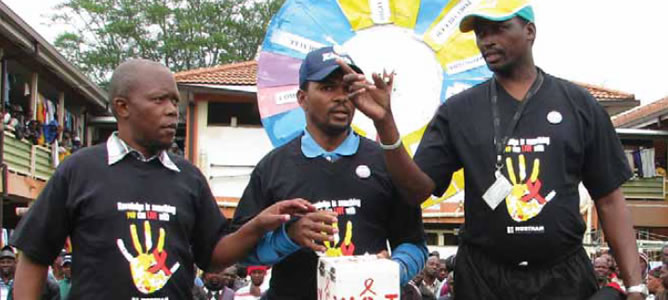
Knowledge is something you can live with
As part of Northam’s commitment to increase participation in the company’s voluntary counselling and testing (VCT) programme, Northam initiated the Knowledge is something you can live with campaign to encourage employees to know their status.
The campaign was the brain child of the company’s peer educator group. This group – comprising 15 employees – supports the company’s wellness programme which offers access to VCT, provides anti-retroviral therapy (ART) as well as professional counselling and support to employees. The programme has been designed to be aligned with the South African Government’s HIV/AIDS and Sexually Transmitted Infections National Strategic Plan and also extends to members of the surrounding communities, including the Setaria village (the mine village), the town of Thabazimbi and the Smash Block informal settlement.
Founded on the company’s commitment to the three Cs which are: Consent, Counselling and Confidentiality, the campaign is aimed at educating employees and community members about the causes of HIV, prevention methods, the advantages of a healthy lifestyle and how entry into the wellness programme can extend their healthy and productive lives.
Since the launch of the campaign on 1 September 2009, the results have been very encouraging with 1 840 employees participating in VCT during F2010 compared with only 388 employees known to have been tested in F2009, which is a 374% increase in VCT participation amongst mine employees.
“At the outset of this campaign, we decided that we would not only focus on the disease, but that we would rather take a holistic approach to the well-being of the individual,” says human resources projects manager, Kenny Mothae.
The campaign originated by way of various brainstorming sessions amongst the group of highly motivated and dedicated peer educators.
“We thought about aspects which impact on the wellbeing of an individual and we decided that in order to help people understand the risks and consequences of HIV/AIDS, we need to address their physical, emotional and mental welfare first. We also realised that HIV/AIDS isn’t only an issue that affects Northam employees on the job, but also the communities where our employees live,” says Kenny.
The campaign is composed of various elements which include:
- Know your body – this section deals with issues relating to the physical health of an individual and covers nutrition and physical exercise.
- Know your mind – this section helps the individual to understand that his or her choices have an impact on his or her own life and the lives of others.
- Know your friends and family – this section covers support systems with the family and community units.
Furthermore, the campaign addresses issues relating to the transmission of HIV/AIDS, preventative measures, support systems in place at the mine and in the community and also deals with stigmatisation and discrimination.
“We are extremely proud of our group of peer educators and we are very pleased with the progress we have made in such a short time. However, we know our work is not done yet and we cannot rest until each and every employee knows their mind, body, family and friends and most importantly, their status,” concludes Kenny.
New cases of TB identified
VCT encounters
Employees on ART
NORTHAM SUSTAINABLE DEVELOPMENT REPORT 2010